Accueil > From implantable to wearable: recent advances in microfluidic platforms for precision drug delivery
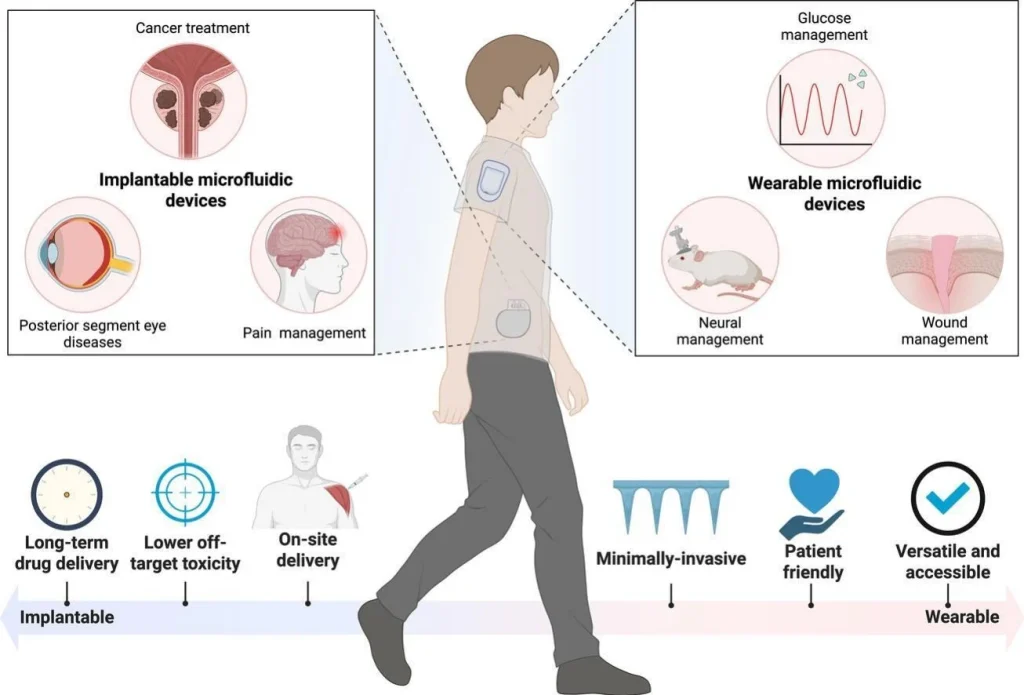
Wearable and implantable microfluidic drug delivery systems have emerged as promising platforms that address key limitations of conventional systems, including poor dosing control, variable bioavailability, and systemic toxicities. By enabling precise manipulation of fluids at the microscale, microfluidic systems could provide precise control over drug dosing rate, timing, and localization, supporting continuous or controlled patient-centered therapy. Recent advances in materials science, microfabrication, and soft bioelectronics have further enabled devices that conform to body tissues, operating successfully and safely within dynamic physiological environments. This review presents a comprehensive and critical assessment of wearable and implantable microfluidic systems used as standalone drug delivery platforms, excluding microfluidics’ role in the synthesis of drug carriers. In detail, we discuss the fundamental design principles, operational mechanisms, and material strategies that underpin these systems, with an emphasis on mechanical compliance and fluidic precision. We then analyze current constraints that limit the widespread clinical adoption of microfluidics, including microfluidic-specific engineering challenges, long-term material stability, power management, biocompatibility, patient acceptability, and regulatory complexity. Attention is given to challenges associated with chronic operation and the integration of soft materials and electronics within compact architectures. Finally, the review highlights emerging directions shaping next-generation microfluidic drug delivery systems, including multimaterial and architected designs, multimodal integration, and AI-assisted control strategies for adaptive and personalized therapy. By synthesizing recent advances along with translational barriers and future directions, this work provides a balanced perspective on the current state of the field and identifies key considerations needed to clinically advance microfluidic drug delivery systems.